

Salt & Flowers
A short fiction story of sea air, grief, and finding solace in a garden.

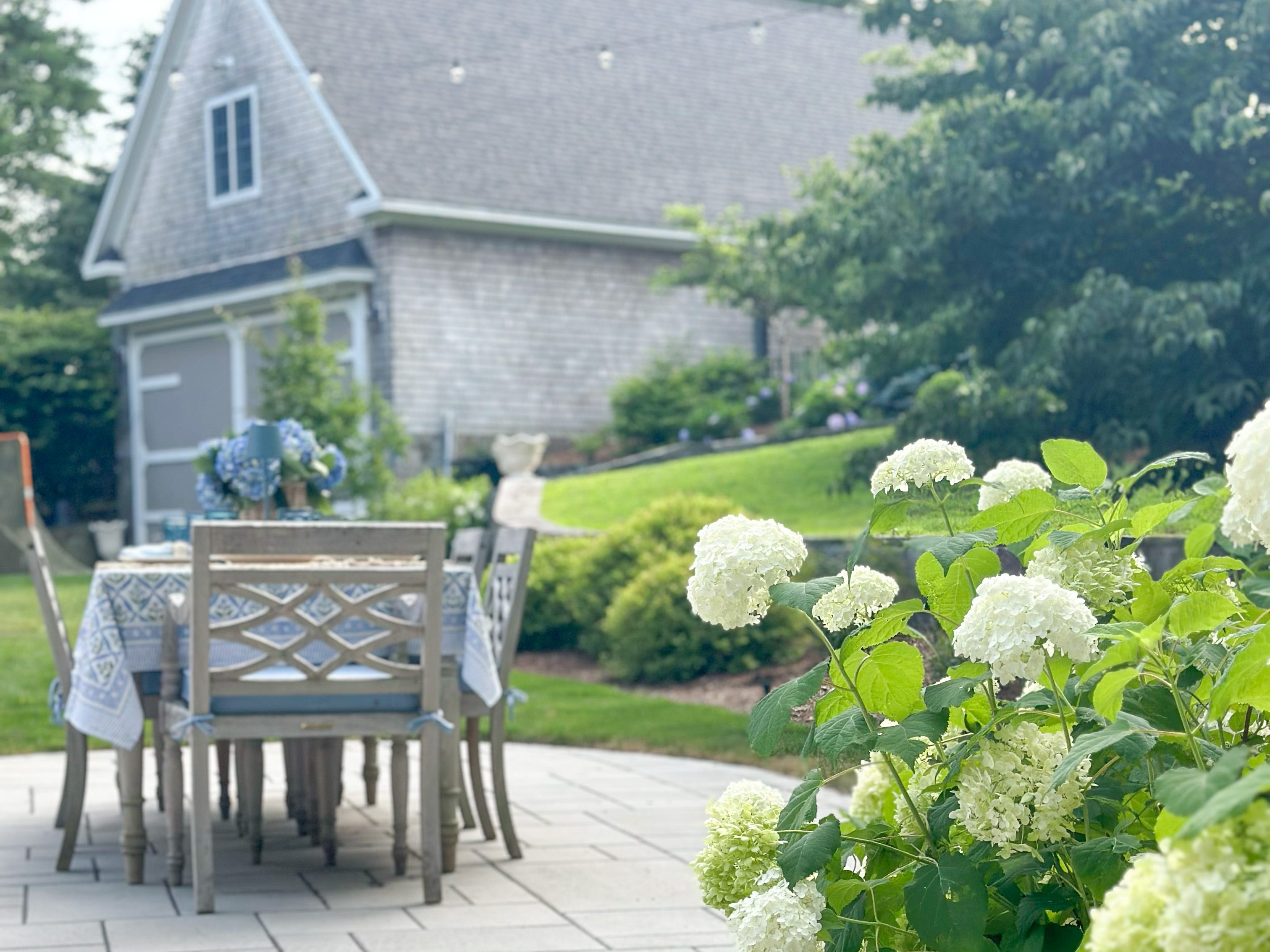
Author’s Note: This is the first piece of fiction I’m sharing with you, written for one of my classes at school. I meant for it to feel mostly relaxing—I’ve always found the imagery of gardens to be the perfect form of escape. Maybe someday I’ll revisit and expand it into something longer. I’d love to hear your thoughts—feel free to leave a comment and let me know what you think!
Samantha didn’t want a house.
She knew most people in her situation—her age, her lifestyle—would see a randomly inherited piece of New Hampshire real estate near the ocean as a gift from the gods.
But honestly, below the sadness over her aunt’s death and gratitude and amazement, she was kind of annoyed and overwhelmed.
Sure, the money from selling it would change everything. It could recover the lost deposits—the ones she’d fronted alone (and that should have been a clue)—from the canceled wedding, pay off her lingering student loans, and maybe give her a cushion against Boston rent and the ever-rising cost of life. Money was always helpful.
The timing, though, couldn’t have been worse. And she had no idea how to manage someone’s estate or sort through a house full of things. There was no “Millennial’s Guide to Inheriting Random Real Estate.” Who was she supposed to call for this kind of stuff?
Most of the drive had been the dull monotony of 95 North, but now she’d turned off, and the industrial and commercial buildings were slowly giving way to leafy and established suburban neighborhoods. Then, she turned onto 1A, and the world opened up in front of her. Endless steely blue ocean, as far as she could see, right beside the road, beyond a jetty of boulders. She always forgot how unexpected it was, how you basically bumped into the ocean without warning here.
She rolled down the windows and inhaled the salty air. The coastline stretched beside her, the wind off the sea lifting her hair. It was a perfect June day, a rare break in what had been an unusually cold spring. People dotted the sandy Jenness Beach off in the distance despite it being a weekday, and for a moment, the view took her back in time.
It had been years since she’d been up here. Her grandparents used to bring her and her cousins up for a week every summer to visit Great Aunt Ida—her grandfather’s sister.
She wondered how her cousins felt about her getting the house. Ida had never cared for the twins, Michelle and Jennifer. They’d been wild as kids, and even wilder teens, sneaking off to Hampton Beach to find trouble during their visits—trouble being boys, mostly.
A staunch rule follower, Samantha hadn’t been one for sneaking off. The disappointment that her grandparents showed the twins after their antics made her stomach hurt. Best to stay put. She’d always liked the house. And the garden. There was something elegant about Aunt Ida, like she belonged to an era of tea parties and long linen gloves. Still, they hadn’t been particularly close. It had been years since her last visit, a fact that stirred a dull guilt.
That was why the inheritance came as a surprise.
“You were her pen pal when you were little,” her mother had said, as if that were a perfectly valid reason to leave someone an entire house. Samantha had been surprised, maybe even a little embarrassed, that her parents hadn’t been included in the will at all. The will had consisted of a house and all of its contents, whatever they may be, to Samantha.
She turned onto the road that led to her aunt’s house and felt a pang as the old stone wall came into view, followed by the cobblestone driveway. Old hardwood trees lined the street, but not too many—the inhabitants of this neighborhood valued their view and proximity to the water. It all looked familiar—yet not. Everything was smaller, the way things always were when you returned to them after childhood.
It was obvious Ida hadn’t been able to keep up with the house and front yard in recent years. Compared to the other stately homes in the country club community, the property looked tired. Overgrown hedges crept toward the driveway, and peeling shutters hung askew. Samantha winced. She wouldn’t be able to just list the house as-is. Not with this much work. It stood out among its manicured neighbors, and not in a good way.
She felt another tug of sadness for Ida, though she could also picture the elderly woman brushing it off. Ida had never cared much for appearances. “I don’t give a fig what the neighbors think,” she used to say, a phrase Samantha suddenly remembered with surprising clarity. Sometimes, there were “two figs,” though Samantha had never quite understood the system, or how many figs a matter was worth.
Samantha parked the car under the porte-cochère, another often-used Ida term, and turned off the engine. The entrance loomed before her. The gabled rooflines cast long shadows on the weathered cedar shingle siding, and soft, pastel climbing roses grew sinuously around the stone columns.
She stepped out slowly, gravel crunching underfoot, and walked toward the wide front steps. A few leaves had gathered in the corners, caught there since the last strong wind. The scalloped brass knocker was tarnished. Just above the knob there was a small note.
Fed the cat – 6/10. – M
Samantha stared at it and tilted her head, reading it again as if the words might rearrange themselves into something that made sense. What cat? There had never been a cat, at least not when she was growing up. The lawyer hadn’t mentioned a cat. Wouldn’t that additional responsibility be important for her to know? At least it had been fed the previous day.
The handwriting was spidery but neat, the kind of cursive that hadn’t been taught in schools for decades. The kind you only saw on thank you notes from old women or embossed Christmas cards.
She unlocked the door and stepped inside. And was greeted with a yowl that nearly startled her out of her skin, even when she’d been expecting it.
A white, fluffy, smooshed-face creature with vivid green eyes perched on the staircase in the foyer with a judgmental gaze. Samantha stood, blinking at it in the dim light. The cat imperiously hopped down the stairs and padded off toward the kitchen as if leading her.
She followed slowly, glancing around. The air inside was cooler than she expected for an old house with no air conditioning, and it didn’t smell as musty as it should have. As if someone had cracked a window and aired it out recently.
The kitchen was mostly how she remembered it. It was quaint, dated, and clean in an unused sort of way. A doily-covered cake stand sat on the counter. No cake. But no dust, either. The same old cracked and peeling linoleum covered the floor, and she wondered briefly for the first time what could be beneath.
Samantha opened the fridge more out of curiosity than expectation. Empty, save for a single white pitcher of water with a sprig of mint floating inside. Fresh mint.
She closed the fridge slowly.
There was a folded linen napkin edged in lace beside the sink. A mug, bone china with faded blue flowers, rested on the drying rack. Just one. Clean.
It was all too neat. Not staged exactly. But it didn’t feel abandoned. It felt… cared for. Thoughtfully so. She wondered if Ida had hired someone to clean for her before her health declined. If that was the case, the lawyer also hadn’t mentioned it.
The cat jumped onto a stool and blinked at her, unimpressed.
“Who’s been taking care of you?” she asked aloud.
The cat responded with a low chirrup, then jumped down and padded toward the French doors at the back of the house. It paused there, glancing over its shoulder like it expected her to follow.
When she opened the doors, warm air rushed around her, thick with the scent of lilacs and fresh earth. The sunlight spilled across the flagstones ahead, illuminating tangled vines and blooms in every corner. Everywhere she looked, petals and leaves pressed toward the light, spilling over the paths and curling around the trellis. The garden was wild and overgrown, but vibrant and alive.
Lilacs leaned lazily against the weathered trellis. Lavender and catmint spilled like lace over the flagstone path. Giant peonies the size of dinner plates and stately foxgloves moved in the ocean breeze. The hydrangeas weren’t in bloom yet—it would be a few weeks still, she remembered—but the leaves were verdant and abundant, and she could tell they would be showstoppers this year.
Whatever deterioration the house had faced as Ida got older, it didn’t seem to extend to the garden. In fact, it seemed to thrive in the neglect, with beautiful colors and new growth filling every possible nook and cranny.
Samantha drew a deep breath. The ocean breeze carried salt and flowers, everything blooming swirling together at once—lush, alive, full.
She wandered a little further. Her shoes crunched over pea gravel that still held the warmth of the day. The cat trailed behind her, then darted off into the lavender.
She found the stone bench beneath the old magnolia. The tree's blooms had come and gone, but the glossy green leaves rustled overhead, and there was still something regal in the way it stood sentinel over the garden path.
She hadn’t known she’d been waiting for this moment until it arrived. All those months of keeping everything locked inside—her fears, her regrets, her disappointments—had been leading here. It felt like she’d been holding her breath without realizing it, and now she could finally let it go. In the stillness of the afternoon, in the soft light and the garden’s hush, the grief and noise of the past year loosened their hold on her. A little. Just enough.
And maybe, she thought, Ida had known she’d need this place—this moment.
With the tears, she felt a small piece of it fall away: the betrayal, the heartbreak, the exhaustion, the quiet discontent she hadn’t known how to name. She exhaled, and for the first time in a long while, it felt enough.
She decided then and there that she didn’t need to decide anything tonight. The realtor could wait. Figuring out how to fix up the house could wait. Even the nameless cat—now stalking a butterfly near the rosemary bush—seemed willing to give her a moment.
Back inside, she boiled water and found a tin of Earl Grey in the cupboard. It hadn’t expired. She set a tray with the china teacup, a plate of crackers she’d packed in her bag and forgotten about, and the linen napkins.
As the sky deepened into shades of lavender and rose, she brought the tray outside and set it on the wrought iron table near the trellis. The garden rustled softly around her. She poured the tea, broke a cracker in half, and raised her cup in a quiet toast.
“Thank you, Ida,” she said aloud.
The cat leapt up onto the chair across from her and watched her, tail flicking.
Samantha smiled and sat back.
She didn’t know what she’d do next.
But for tonight, all of this was hers.
What great writing! I do hope you continue this story.
What a lovely story. It needs to continue. I have read many, many books in my lifetime and this was a wonderful read. Please don’t stop!